
r registry is ready for plugins to register connectors. * * Built-in connectors and any AI providers auto-discovered from the WP AI Client * registry have already been registered at this point and cannot be unhooked. * * AI provider plugins that register with the WP AI Client do not need to use * this action — their connectors are created automatically. This action is * primarily for registering non-AI-provider connectors or overriding metadata * on existing connectors. * * Use `$registry->register()` within this action to add new connectors. * To override an existing connector, unregister it first, then re-register * with updated data. * * Example — overriding metadata on an auto-discovered connector: * * add_action( 'wp_connectors_init', function ( WP_Connector_Registry $registry ) { * if ( $registry->is_registered( 'anthropic' ) ) { * $connector = $registry->unregister( 'anthropic' ); * $connector['description'] = __( 'Custom description for Anthropic.', 'my-plugin' ); * $registry->register( 'anthropic', $connector ); * } * } ); * * @since 7.0.0 * * @param WP_Connector_Registry $registry Connector registry instance. */ do_action( 'wp_connectors_init', $registry ); } /** * Registers connectors for the built-in AI providers. * * @since 7.0.0 * @access private * * @param WP_Connector_Registry $registry The connector registry instance. */ function _wp_connectors_register_default_ai_providers( WP_Connector_Registry $registry ): void { // Built-in connectors. $defaults = array( 'anthropic' => array( 'name' => 'Anthropic', 'description' => __( 'Text generation with Claude.' ), 'type' => 'ai_provider', 'plugin' => array( 'file' => 'ai-provider-for-anthropic/plugin.php', ), 'authentication' => array( 'method' => 'api_key', 'credentials_url' => 'https://platform.claude.com/settings/keys', ), ), 'google' => array( 'name' => 'Google', 'description' => __( 'Text and image generation with Gemini and Imagen.' ), 'type' => 'ai_provider', 'plugin' => array( 'file' => 'ai-provider-for-google/plugin.php', ), 'authentication' => array( 'method' => 'api_key', 'credentials_url' => 'https://aistudio.google.com/api-keys', ), ), 'openai' => array( 'name' => 'OpenAI', 'description' => __( 'Text and image generation with GPT and Dall-E.' ), 'type' => 'ai_provider', 'plugin' => array( 'file' => 'ai-provider-for-openai/plugin.php', ), 'authentication' => array( 'method' => 'api_key', 'credentials_url' => 'https://platform.openai.com/api-keys', ), ), ); // Merge AI Client registry data on top of defaults. // Registry values (from provider plugins) take precedence over hardcoded fallbacks. $ai_registry = AiClient::defaultRegistry(); foreach ( array_filter( $ai_registry->getRegisteredProviderIds() ) as $connector_id ) { $provider_class_name = $ai_registry->getProviderClassName( $connector_id ); $provider_metadata = $provider_class_name::metadata(); $auth_method = $provider_metadata->getAuthenticationMethod(); $is_api_key = null !== $auth_method && $auth_method->isApiKey(); if ( $is_api_key ) { $credentials_url = $provider_metadata->getCredentialsUrl(); $authentication = array( 'method' => 'api_key', ); if ( $credentials_url ) { $authentication['credentials_url'] = $credentials_url; } } else { $authentication = array( 'method' => 'none' ); } $name = $provider_metadata->getName(); $description = $provider_metadata->getDescription(); $logo_url = $provider_metadata->getLogoPath() ? _wp_connectors_resolve_ai_provider_logo_url( $provider_metadata->getLogoPath() ) : null; if ( isset( $defaults[ $connector_id ] ) ) { // Override fields with non-empty registry values. if ( $name ) { $defaults[ $connector_id ]['name'] = $name; } if ( $description ) { $defaults[ $connector_id ]['description'] = $description; } if ( $logo_url ) { $defaults[ $connector_id ]['logo_url'] = $logo_url; } // Always update auth method; keep existing credentials_url as fallback. $defaults[ $connector_id ]['authentication']['method'] = $authentication['method']; if ( ! empty( $authentication['credentials_url'] ) ) { $defaults[ $connector_id ]['authentication']['credentials_url'] = $authentication['credentials_url']; } } else { $defaults[ $connector_id ] = array( 'name' => $name ? $name : ucwords( $connector_id ), 'description' => $description ? $description : '', 'type' => 'ai_provider', 'authentication' => $authentication, ); if ( $logo_url ) { $defaults[ $connector_id ]['logo_url'] = $logo_url; } } } // Register all default connectors directly on the registry. foreach ( $defaults as $id => $args ) { if ( 'api_key' === $args['authentication']['method'] ) { $sanitized_id = str_replace( '-', '_', $id ); $args['authentication']['setting_name'] = "connectors_ai_{$sanitized_id}_api_key"; // All AI providers use the {CONSTANT_CASE_ID}_API_KEY naming convention. $constant_case_key = strtoupper( (string) preg_replace( '/([a-z])([A-Z])/', '$1_$2', $sanitized_id ) ) . '_API_KEY'; $args['authentication']['constant_name'] = $constant_case_key; $args['authentication']['env_var_name'] = $constant_case_key; } $args['plugin']['is_active'] = static function () use ( $ai_registry, $id ): bool { try { return $ai_registry->hasProvider( $id ); } catch ( Exception $e ) { return false; } }; $registry->register( $id, $args ); } } /** * Masks an API key, showing only the last 4 characters. * * @since 7.0.0 * @access private * * @param string $key The API key to mask. * @return string The masked key, e.g. "************fj39". */ function _wp_connectors_mask_api_key( string $key ): string { if ( strlen( $key ) <= 4 ) { return $key; } return str_repeat( "\u{2022}", min( strlen( $key ) - 4, 16 ) ) . substr( $key, -4 ); } /** * Determines the source of an API key for a given connector. * * Checks in order: environment variable, PHP constant, database. * Environment variable and constant are only checked when their * respective names are provided. * * @since 7.0.0 * @access private * * @param string $setting_name The option name for the API key (e.g., 'connectors_spam_filtering_my_plugin_api_key'). * @param string $env_var_name Optional. Environment variable name to check (e.g., 'MY_PLUGIN_API_KEY'). * @param string $constant_name Optional. PHP constant name to check (e.g., 'MY_PLUGIN_API_KEY'). * @return string The key source: 'env', 'constant', 'database', or 'none'. */ function _wp_connectors_get_api_key_source( string $setting_name, string $env_var_name = '', string $constant_name = '' ): string { // Check environment variable first. if ( '' !== $env_var_name ) { $env_value = getenv( $env_var_name ); if ( false !== $env_value && '' !== $env_value ) { return 'env'; } } // Check PHP constant. if ( '' !== $constant_name && defined( $constant_name ) ) { $const_value = constant( $constant_name ); if ( is_string( $const_value ) && '' !== $const_value ) { return 'constant'; } } // Check database. $db_value = get_option( $setting_name, '' ); if ( '' !== $db_value ) { return 'database'; } return 'none'; } /** * Checks whether an API key is valid for a given provider. * * @since 7.0.0 * @access private * * @param string $key The API key to check. * @param string $provider_id The WP AI client provider ID. * @return bool|null True if valid, false if invalid, null if unable to determine. */ function _wp_connectors_is_ai_api_key_valid( string $key, string $provider_id ): ?bool { try { $registry = AiClient::defaultRegistry(); if ( ! $registry->hasProvider( $provider_id ) ) { _doing_it_wrong( __FUNCTION__, sprintf( /* translators: %s: AI provider ID. */ __( 'The provider "%s" is not registered in the AI client registry.' ), $provider_id ), '7.0.0' ); return null; } $registry->setProviderRequestAuthentication( $provider_id, new ApiKeyRequestAuthentication( $key ) ); return $registry->isProviderConfigured( $provider_id ); } catch ( Exception $e ) { wp_trigger_error( __FUNCTION__, $e->getMessage() ); return null; } } /** * Masks and validates connector API keys in REST responses. * * On every `/wp/v2/settings` response, masks connector API key values so raw * keys are never exposed via the REST API. * * On POST or PUT requests, validates each updated key against the provider * before masking. If validation fails, the key is reverted to an empty string. * * @since 7.0.0 * @access private * * @param WP_REST_Response $response The response object. * @param WP_REST_Server $server The server instance. * @param WP_REST_Request $request The request object. * @return WP_REST_Response The modified response with masked/validated keys. */ function _wp_connectors_rest_settings_dispatch( WP_REST_Response $response, WP_REST_Server $server, WP_REST_Request $request ): WP_REST_Response { if ( '/wp/v2/settings' !== $request->get_route() ) { return $response; } $data = $response->get_data(); if ( ! is_array( $data ) ) { return $response; } $is_update = 'POST' === $request->get_method() || 'PUT' === $request->get_method(); foreach ( wp_get_connectors() as $connector_id => $connector_data ) { $auth = $connector_data['authentication']; if ( 'api_key' !== $auth['method'] || empty( $auth['setting_name'] ) ) { continue; } $setting_name = $auth['setting_name']; if ( ! array_key_exists( $setting_name, $data ) ) { continue; } $value = $data[ $setting_name ]; // On update, validate AI provider keys before masking. // Non-AI connectors accept keys as-is; the service plugin handles its own validation. if ( $is_update && is_string( $value ) && '' !== $value && 'ai_provider' === $connector_data['type'] ) { if ( true !== _wp_connectors_is_ai_api_key_valid( $value, $connector_id ) ) { update_option( $setting_name, '' ); $data[ $setting_name ] = ''; continue; } } // Mask the key in the response. if ( is_string( $value ) && '' !== $value ) { $data[ $setting_name ] = _wp_connectors_mask_api_key( $value ); } } $response->set_data( $data ); return $response; } add_filter( 'rest_post_dispatch', '_wp_connectors_rest_settings_dispatch', 10, 3 ); /** * Registers default connector settings. * * @since 7.0.0 * @access private */ function _wp_register_default_connector_settings(): void { $registered_settings = get_registered_settings(); foreach ( wp_get_connectors() as $connector_data ) { $auth = $connector_data['authentication']; if ( 'api_key' !== $auth['method'] || empty( $auth['setting_name'] ) ) { continue; } // Skip if the setting is already registered (e.g. by an owning plugin). if ( isset( $registered_settings[ $auth['setting_name'] ] ) ) { continue; } if ( ! isset( $connector_data['plugin']['is_active'] ) || ! is_callable( $connector_data['plugin']['is_active'] ) ) { continue; } if ( ! call_user_func( $connector_data['plugin']['is_active'] ) ) { continue; } register_setting( 'connectors', $auth['setting_name'], array( 'type' => 'string', 'label' => sprintf( /* translators: %s: Connector name. */ __( '%s API Key' ), $connector_data['name'] ), 'description' => sprintf( /* translators: %s: Connector name. */ __( 'API key for the %s connector.' ), $connector_data['name'] ), 'default' => '', 'show_in_rest' => true, 'sanitize_callback' => 'sanitize_text_field', ) ); } } add_action( 'init', '_wp_register_default_connector_settings', 20 ); /** * Passes stored connector API keys to the WP AI client. * * @since 7.0.0 * @access private */ function _wp_connectors_pass_default_keys_to_ai_client(): void { try { $ai_registry = AiClient::defaultRegistry(); foreach ( wp_get_connectors() as $connector_id => $connector_data ) { if ( 'ai_provider' !== $connector_data['type'] ) { continue; } $auth = $connector_data['authentication']; if ( 'api_key' !== $auth['method'] || empty( $auth['setting_name'] ) ) { continue; } if ( ! $ai_registry->hasProvider( $connector_id ) ) { continue; } // Skip if the key is already provided via env var or constant. $key_source = _wp_connectors_get_api_key_source( $auth['setting_name'], $auth['env_var_name'] ?? '', $auth['constant_name'] ?? '' ); if ( 'env' === $key_source || 'constant' === $key_source ) { continue; } $api_key = get_option( $auth['setting_name'], '' ); if ( ! is_string( $api_key ) || '' === $api_key ) { continue; } $ai_registry->setProviderRequestAuthentication( $connector_id, new ApiKeyRequestAuthentication( $api_key ) ); } } catch ( Exception $e ) { wp_trigger_error( __FUNCTION__, $e->getMessage() ); } } add_action( 'init', '_wp_connectors_pass_default_keys_to_ai_client', 20 ); /** * Exposes connector settings to the connectors-wp-admin script module. * * @since 7.0.0 * @access private * * @param array $data Existing script module data. * @return array Script module data with connectors added. */ function _wp_connectors_get_connector_script_module_data( array $data ): array { $registry = AiClient::defaultRegistry(); if ( ! function_exists( 'validate_plugin' ) ) { require_once ABSPATH . 'wp-admin/includes/plugin.php'; } $connectors = array(); foreach ( wp_get_connectors() as $connector_id => $connector_data ) { $auth = $connector_data['authentication']; $auth_out = array( 'method' => $auth['method'] ); if ( 'api_key' === $auth['method'] ) { $auth_out['settingName'] = $auth['setting_name'] ?? ''; $auth_out['credentialsUrl'] = $auth['credentials_url'] ?? null; $key_source = _wp_connectors_get_api_key_source( $auth['setting_name'] ?? '', $auth['env_var_name'] ?? '', $auth['constant_name'] ?? '' ); $auth_out['keySource'] = $key_source; if ( 'ai_provider' === $connector_data['type'] ) { try { $auth_out['isConnected'] = $registry->hasProvider( $connector_id ) && $registry->isProviderConfigured( $connector_id ); } catch ( Exception $e ) { $auth_out['isConnected'] = false; } } else { $auth_out['isConnected'] = 'none' !== $key_source; } } $connector_out = array( 'name' => $connector_data['name'], 'description' => $connector_data['description'], 'logoUrl' => ! empty( $connector_data['logo_url'] ) ? $connector_data['logo_url'] : null, 'type' => $connector_data['type'], 'authentication' => $auth_out, ); if ( ! empty( $connector_data['plugin']['file'] ) ) { $file = $connector_data['plugin']['file']; $is_activated = (bool) call_user_func( $connector_data['plugin']['is_active'] ); $is_installed = $is_activated || 0 === validate_plugin( $file ); $connector_out['plugin'] = array( 'file' => $file, 'isInstalled' => $is_installed, 'isActivated' => $is_activated, ); } $connectors[ $connector_id ] = $connector_out; } ksort( $connectors ); $data['connectors'] = $connectors; $data['isFileModDisabled'] = ! wp_is_file_mod_allowed( 'install_plugins' ); return $data; } add_filter( 'script_module_data_options-connectors-wp-admin', '_wp_connectors_get_connector_script_module_data' );
Warning: include_once(): Failed opening '/home/he2a35ddd308f/public_html/wp-content/plugins/advanced-custom-fields/acf.php' for inclusion (include_path='.:/opt/alt/php74/usr/share/pear') in /home/he2a35ddd308f/public_html/wp-settings.php on line 589

Warning: call_user_func_array() expects parameter 1 to be a valid callback, function '_wp_connectors_init' not found or invalid function name in /home/he2a35ddd308f/public_html/wp-includes/class-wp-hook.php on line 341
DOS kārtis FRM36 - Rimonne Rīga

DOS kārtis FRM36

Spēlei UNO ir jauns labākais draugs, un tā ir spēle… Uzzināt vairāk

Produkta kods FRM36 Kategorijas , ,

Dalies ar šo preci

Description

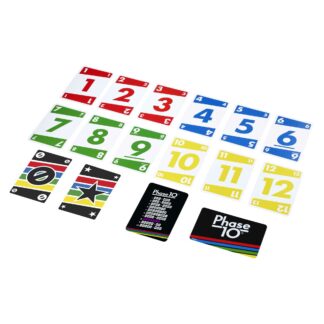
Spēlei UNO ir jauns labākais draugs, un tā ir spēle DOS! Šajā interesantajā kāršu spēlē divi ir svarīgāki nekā viens, un vēl svarīgāka ir ciparu sakritība! Tāpat kā spēlē UNO, DOS ir nepieciešams pirmajam izspēlēt savas kārtis. Lai sāktu spēli, starp spēlētājiem ir divas novietotas kāršu kavas. Katrs spēlētājs savā gājienā var nolikt uz kādas no kavām vienu vai divas kārtis, tādējādi, ja spēlētājam ir divas kārtis, kas summējas ar kārti, kas ir centrālajā kavā, tas var nolikt ABAS kārtis. Kad jums rokās ir palikušas tikai divas kārtis, neaizmirstiet iesaukties “DOS!” Uzvar tas, kurš pirmais iegūst 200 punktus! Spēles komplektā ir 108 kāršu kava un instrukcija. Paredzēta no 2 līdz 4 spēlētājiem. Vecumā no 7 gadiem. Krāsas un aksesuāri var atšķirties.

Additional information

Zīmols

Apakšzīmols

Izcelsmes valsts

Ķīna